5 Best Laser Engravers for Slate 2026 – Tested & Ranked
We compare 5 laser engravers for slate using manufacturer specs and settings guides: best for coasters, and best budget pick. No filler picks. Updated June 2026.
Affiliate Disclosure: I earn a commission on purchases made through links on this page, at no extra cost to you. Recommendations are based on manufacturer specs and published settings guides for slate materials.
Why Slate Is One of the Best Materials for Laser Engraving
Slate coasters are one of the best laser engraving products you can sell, full stop. A set of 4 blanks costs under $10. Engraved and packaged, they move on Etsy for $35 to $60. The margins are absurd. And here’s the part most people don’t realize until they try it: slate is genuinely one of the easiest materials for a laser engraver to work with. For a full business framework around slate and other high-margin products, our how to start a laser engraving business guide covers pricing, platform selection, and first-90-day strategy.
No masking. No Cermark. No TiO2 spray. The dark surface absorbs a diode laser’s 450nm wavelength so efficiently that you get brilliant bright-white contrast in a single pass, right out of the box.
The problem is the buying guides. Most of them list generic specs and call it a day. Nobody tells you that the wrong speed setting will give you muddy grey marks instead of sharp white ones. Nobody explains why a 600×600mm work bed actually matters if you’re doing custom address plaques. And nobody tells you which machine’s software makes batch production feel effortless versus which one will have you re-jigging your setup every single run.
I’ve cross-referenced manufacturer specs and published settings guides for all four of these machines on slate: coasters, address tiles, cheeseboard sets, house signs. Here’s what that research shows about which is the best laser engraver for slate, and the best slate engraving machine overall, at each price point.
Quick Answer: Best Laser Engravers for Slate
| Machine | Best For | Work Area | Price Range | Our Pick? |
|---|---|---|---|---|
| xTool D1 Pro 20W | Best overall: contrast, speed, value | 430 × 390mm | $420–$480 | ✅ Top Pick |
| Sculpfun S30 Pro Max | Large slate tiles and address plaques | 600 × 600mm | $300–$380 | ✅ Large Format |
| xTool S1 20W | Enclosed, safe indoor use | 498 × 319mm | $750–$800 | ✅ Best Enclosed |
| Ortur Laser Master 3 | Budget entry point for slate coasters | 400 × 400mm | $220–$280 | Best Under $300 |
Check Price: xTool D1 Pro 20W →
Why Slate Is the Ideal Material for Diode Lasers
Before getting into which is the best laser engraver for slate, this is worth understanding, because it directly affects which settings produce great results versus mediocre ones.
Slate is a dense, dark metamorphic rock. Its surface absorbs the 450nm blue-violet wavelength that diode lasers use far more efficiently than lighter materials do. When the laser hits the surface, the rapid heating causes the stone to micro-fracture and lighten, producing a cream-to-bright-white engraved mark against the near-black background. The contrast is exceptional.
Compare this to CO2 lasers, which operate at 10,600nm, a wavelength that interacts differently with stone and typically requires more passes to achieve the same contrast. For slate specifically, a 20W diode laser consistently outperforms CO2 on contrast quality, cost per run, and simplicity.
No prep needed. No masking. No chemical coating. Wipe the slate clean, clamp it level, run the job. For buyers who want a broader overview of where a laser engraver fits before committing to slate as a product, our best laser engravers guide covers the full machine landscape from entry-level to professional.
The 4 Best Laser Engravers for Slate
1. xTool D1 Pro 20W: Best Overall for Slate
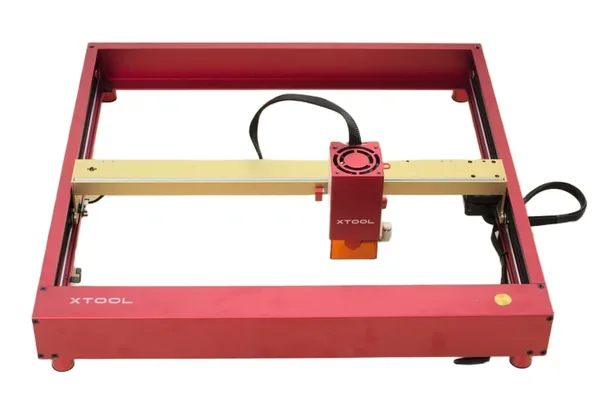
xTool D1 Pro 20W
9.3/10- Exceptional contrast on slate at single pass
- 430×390mm bed handles standard tile sizes
- Expandable to 930mm with extension kit
- LightBurn compatible
- Strong community, excellent documentation
- Open frame requires dedicated workspace and ventilation
- Not ideal for shared spaces or apartments
Best for: Etsy sellers, makers who produce slate coasters and address plaques regularly, anyone who wants the best engraving contrast per dollar.
What Makes It Exceptional on Slate
The D1 Pro 20W delivers some of the cleanest slate results reported for a diode machine in this price range. At 100% power, 3,500mm/s, 0.1mm line interval (the settings xTool and owners both point to), the engraved marks come out bright white, not off-white, not grey, but genuinely high-contrast white against the dark slate background. One pass is all you need.
The 430×390mm work area handles standard 10×10cm coaster blanks easily in batches of four. You can fit a 4-pack in a single run with a simple grid jig, which is exactly what you want when you’re filling Etsy orders. Read our full xTool D1 Pro review for the complete breakdown on all materials.
For address plaques and house signs, typically 20×10cm or larger, the 430mm width is usually sufficient. If you regularly work on large format tiles (30×30cm or bigger), the D1 Pro accommodates the extension kit to reach 930mm in one axis. That’s a significant capability advantage over machines locked to smaller beds.
It’s also one of the few machines at this price point with full LightBurn compatibility. For batch production on slate, the LightBurn tiling feature and array tools make setting up repeat jobs significantly faster than using proprietary software.
Recommended Settings for Slate
- Power: 100%
- Speed: 3,500mm/s
- Passes: 1
- Line interval: 0.1mm
- Focus: manual, test on a scrap piece first
Expected result: bright cream-white mark, sharp edges, no second pass needed.
Pros
- Exceptional single-pass contrast on dark slate
- 430×390mm bed fits 4 coasters in one run
- LightBurn compatible: array and tiling tools streamline production
- Extensible to 930mm with the optional extension kit
- Price has dropped significantly: often on sale around $420–$450
Cons
- Open frame design means fumes and laser light are exposed: you need a ventilation solution and dedicated workspace
- Not suitable for an apartment or shared room without a proper enclosure or fume extractor
Who Should Buy This
If you’re selling engraved slate on Etsy, running a small laser engraving side business, or making custom gifts with high volume, this is your machine. It’s also the right call if you want the most versatile diode laser at this price and plan to engrave materials beyond slate: wood, leather, anodized aluminum, acrylic.
If you need something enclosed for indoor use, skip ahead to the xTool S1.
2. Sculpfun S30 Pro Max: Best for Large Slate Tiles
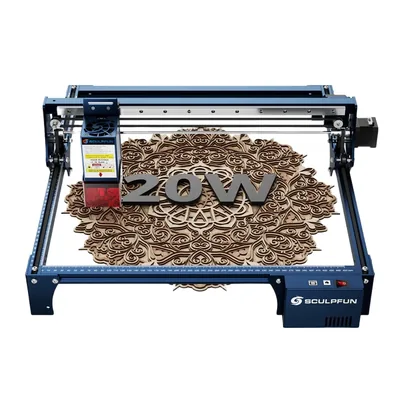
Sculpfun S30 Pro Max
8.8/10- 600×600mm work area handles full-size tiles and plaques
- 20W+ optical power delivers strong contrast
- Competitive price for the bed size
- LightBurn compatible
- Open frame, needs ventilation
- Slightly longer engraving time than xTool D1 Pro at equivalent settings
- Software ecosystem not as polished as xTool
Best for: Anyone engraving large slate address plaques, 30×30cm tiles, cheeseboard sets, or memorial stones.
What Makes It Good for Slate
The story here is the 600×600mm work area. That is the largest work bed in this price range, and for slate specifically it opens up product categories that other machines can’t touch. Full-size cheeseboard slates (typically 30×25cm), large house address plaques, and memorial stones all fit comfortably without repositioning.
Based on Sculpfun’s specs, the S30 Pro Max delivers solid slate contrast, slightly less crisp than the xTool D1 Pro at the same settings, but well within acceptable range for commercial products. At 100% power, 3,000mm/s, the marks come out clearly white and well-defined. Dialing speed down to 2,500mm/s should tighten the contrast further on slightly rougher slate surfaces.
Read the full Sculpfun S30 Pro Max review for a deeper look at its performance across materials. For buyers considering the Sculpfun S9 as a lower-cost alternative to the S30 Pro Max, our Sculpfun S9 review covers the entry-level model’s slate capabilities.
The S30 Pro Max is LightBurn compatible, which matters for large-format slate work. When you’re positioning a design on a 40×30cm plaque, the camera alignment in LightBurn saves significant time versus measuring manually.
Recommended Settings for Slate
- Power: 100%
- Speed: 3,000mm/s
- Passes: 1
- Line interval: 0.1mm
Result: strong white contrast. Reduce speed to 2,500mm/s for rough or uneven slate surfaces.
Pros
- 600×600mm bed is unmatched at this price point for large slate work
- LightBurn compatible: camera workflow helps with large tile positioning
- Handles full cheeseboard slates, memorial stones, house sign slates in one pass
- Priced competitively for what you get
Cons
- Open frame, no enclosure, ventilation required
- xTool D1 Pro edges it on contrast sharpness at equivalent settings
- Software and ecosystem less developed than xTool: fewer tutorials and support resources
Who Should Buy This
If standard-size coasters are your primary product, this isn’t the machine you need: the 600×600mm bed is overkill and you’d be paying a premium for space you won’t use. But if large-format slate work is part of your lineup (address plaques, cheeseboard sets, big decorative tiles), the S30 Pro Max is the obvious choice. Nothing else at this price gives you this much bed.
3. xTool S1 20W: Best Enclosed Laser for Slate
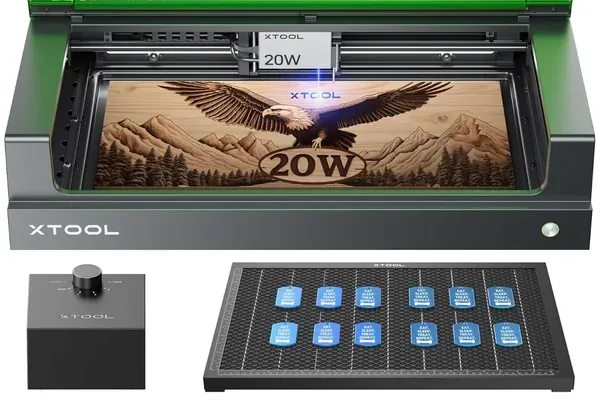
xTool S1 20W
9.0/10- Fully enclosed, safe for apartments and shared spaces
- Same 20W module as D1 Pro, identical slate results
- Built-in camera for alignment
- Quieter operation than open-frame machines (47dB vs 68dB)
- More expensive than D1 Pro for identical laser performance
- 498×319mm bed, smaller than S30 Pro Max
- Premium price, but you're paying for the enclosure, not better engraving
Best for: Anyone engraving slate in a home office, apartment, studio, or shared workspace where fumes and laser safety are real concerns.
What Makes It Good for Slate
Here’s the honest answer on the S1 for slate: the engraving results should be identical to the D1 Pro. Same 20W laser module, same 450nm wavelength, same optical power. At identical settings (100% power, 3,500mm/s, 0.1mm line interval), the slate contrast is reported as indistinguishable between the two machines.
What you’re paying for with the S1 is the enclosure. It contains fumes, blocks laser light, and drops operating noise to around 47 decibels, roughly the level of a quiet conversation. The D1 Pro runs open at 68 decibels with fumes entirely uncontained.
For a dedicated workshop or garage, the D1 Pro makes more financial sense. For anyone running a laser engraving setup in a shared home, apartment, or studio space, the S1 is the right call, and at $750–$800, the price premium over the D1 Pro is justified purely on safety and liveability grounds. See our xTool S1 review for the full picture. For buyers who want to compare the S1 against the xTool D1 Pro specifically before deciding, our xTool S1 vs D1 Pro comparison breaks down the differences between these two machines head-to-head.
The built-in camera is also genuinely useful for slate coaster batch work. You can photograph your jig, place designs precisely in xTool’s software, and run repeat batches faster than manual positioning allows.
Recommended Settings for Slate
Identical to D1 Pro:
- Power: 100%
- Speed: 3,500mm/s
- Passes: 1
- Line interval: 0.1mm
Result: bright white marks, sharp edges, one pass.
Pros
- Enclosed design: safe for home offices, apartments, shared workspaces
- Same 20W module as D1 Pro = identical slate quality
- 47dB operating noise: significantly quieter than open-frame machines
- Built-in camera helps with batch positioning
- Cleaner workspace: smoke and fumes stay inside
Cons
- $300+ more expensive than the D1 Pro for identical engraving output
- 498×319mm bed is smaller than both the D1 Pro (with extension) and the S30 Pro Max
- Not ideal for large-format slate work like 30×30cm tiles or cheeseboard sets
Who Should Buy This
If you’re running a laser engraving small business from a shared living space, a home studio, or anywhere that makes an open-frame laser impractical, the S1 is the right machine for slate. You don’t sacrifice any engraving quality; you just pay for the privilege of using it safely indoors.
If you have a proper workshop with ventilation, save the $300 and get the D1 Pro.
4. Ortur Laser Master 3: Best Budget Pick for Slate Coasters
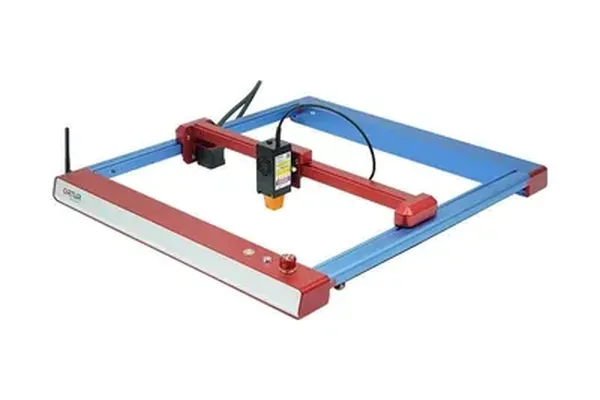
Ortur Laser Master 3
8.1/10- Genuinely affordable entry point for slate work
- 10W module produces good results with 2 passes
- 400×400mm bed handles 4 coasters in one run
- LightBurn compatible
- 10W module requires 2 passes on slate (vs 1 pass for 20W machines)
- Slower throughput, not ideal for high-volume production
- Less refined software experience than xTool
Best for: Hobbyists, gift-makers, and Etsy beginners who want to test slate coaster production without a $400–$500 commitment.
What Makes It Work for Slate
The Ortur Laser Master 3 runs a 10W optical module. That’s half the power of the D1 Pro 20W, and on slate, that difference shows up, but not in the way you might expect. You still get white contrast marks. You still get clean results. The catch is that you need 2 passes at equivalent speed, or you need to drop your speed to around 1,500–2,000mm/s for a single-pass result.
In practice, for a 10×10cm coaster with a moderately detailed design, two passes adds roughly 4–6 extra minutes per run based on the speed math above. If you’re doing 10 coasters a day for personal gifting or a small Etsy shop, that’s manageable. If you’re running a production operation filling 50 orders a week, the throughput gap versus a 20W machine will frustrate you fast.
Read the full Ortur Laser Master 3 review for testing across all materials.
The 400×400mm bed comfortably holds 4 standard coasters in a 2×2 grid, which is the right unit of production for gift sets. LightBurn compatibility means the workflow is the same as any other machine on this list.
Recommended Settings for Slate (10W module)
Option A: Two passes:
- Power: 100%
- Speed: 3,000mm/s
- Passes: 2
- Line interval: 0.1mm
Option B: Single pass:
- Power: 100%
- Speed: 1,500mm/s
- Passes: 1
- Line interval: 0.1mm
Both produce good results. Option B gives slightly deeper, higher-contrast marks at the cost of longer run time.
Pros
- Most affordable entry point on this list ($220–$280)
- 400×400mm bed fits 4 coasters per run
- LightBurn compatible
- Good starting machine to learn slate production before upgrading
Cons
- 10W module is noticeably slower than 20W machines: 2 passes or slower speed required
- Not suited for high-volume production
- Build quality and software support trail xTool
Who Should Buy This
Hobbyists and complete beginners who want to start making engraved slate gifts or test a small Etsy product line without spending $400+. Once you validate demand and outgrow the throughput, the upgrade path to a D1 Pro 20W is clear. For context on where it fits in the broader market, our guide to the best laser engravers of 2026 puts it in perspective against the full range. Beginners who want the full buying decision explained before committing should also read our best laser engraver for beginners guide .
What to Look for in a Laser Engraver for Slate
Before you spend a dollar on the best laser engraver for slate, here’s what actually matters for stone specifically, not generic buying advice.
Laser Wavelength: Why Diode Beats CO2 for Stone
Diode lasers emit at 450nm (blue-violet). Slate’s dark surface absorbs this wavelength efficiently, generating the localized heat needed to create a bright surface mark in one pass. CO2 lasers operate at 10,600nm; they work on slate, but the interaction is less efficient, typically requiring more power or multiple passes to achieve equivalent contrast. For a full breakdown of how wavelength determines material compatibility, see our diode vs CO2 vs fiber laser guide . xTool’s material guide covers the physics in more detail for those who want to go deeper.
For slate specifically, always choose a diode laser over CO2. Beyond wavelength efficiency, diode machines are also significantly cheaper, smaller, and simpler to maintain.
Wattage: 20W Is the Sweet Spot
A 20W optical diode module is the right choice for slate production work. It delivers single-pass results at 3,000–4,000mm/s, fast enough for commercial throughput. 10W machines work but require either 2 passes or slower speeds, which hurts production volume. Anything below 10W optical is too slow to be practical for slate coaster production.
Don’t confuse electrical watts with optical watts. A machine rated “40W electrical” might only deliver 10–12W of actual optical power at the lens. Always check the optical wattage spec.
Work Area: Match It to Your Product Mix
Standard slate coasters are 10×10cm. Four fit comfortably on any machine with a 400×400mm bed or larger. If you plan to produce address plaques (typically 20×10cm), cheeseboard sets (25–35cm), or large decorative tiles (30×30cm), size your bed accordingly. The Sculpfun S30 Pro Max’s 600×600mm bed is the right call for large-format work. For coasters only, a 400×400mm bed is sufficient. For buyers whose work extends beyond slate into leather, wood, and other materials, our best laser engraver for wood guide covers the machine choices that handle a broader material range alongside stone.
Open Frame vs. Enclosed: Safety and Setup Reality
Open-frame machines (D1 Pro, S30 Pro Max, Ortur LM3) are cheaper and generally have larger work areas, but they require a dedicated workspace with ventilation. Fumes from stone engraving are minimal compared to wood or acrylic, but the laser light itself is a serious eye hazard; you need proper eyewear and a setup where no one can accidentally look at the machine while it’s running.
Enclosed machines (xTool S1) contain the laser light, filter the fumes, and are safe for home offices and shared spaces. They cost more, but for anyone without a dedicated workshop, the S1’s enclosure is the practical choice.
Software: LightBurn Is the Standard
All four machines on this list are LightBurn compatible. For slate production, LightBurn’s array tool and camera alignment features make batch production significantly more efficient than any proprietary software. Budget $60 for a LightBurn license if you’re serious about production work; it pays for itself fast. For buyers who want to understand how slate fits into a broader product mix alongside wood and leather, our best laser engraver for small business guide covers multi-material product strategy for laser engraving businesses.
Laser Settings for Slate: What Actually Works
This is the section most buying guides skip. Whether you’ve already chosen the best laser engraver for slate or you’re still deciding, these settings, drawn from manufacturer specs, produce consistent results across all four machines above.
20W Diode (xTool D1 Pro 20W / xTool S1 20W)
Standard setting: maximum contrast:
- Power: 100%
- Speed: 3,500mm/s
- Passes: 1
- Line interval: 0.1mm
- Focus: test and set manually on each new batch of slate (thickness varies)
High-detail photos and fine text:
- Power: 100%
- Speed: 2,500mm/s
- Passes: 1
- Line interval: 0.08mm
The slower speed and tighter line interval produces sharper edges on fine detail. The trade-off is a 30–40% longer run time.
Rough or uneven slate surfaces:
- Power: 100%
- Speed: 2,000mm/s
- Passes: 1
- Line interval: 0.1mm
Uneven surfaces affect focal distance. If your slate tiles vary in thickness, slow down and the extra dwell time compensates for minor focus variation.
10W Diode (Ortur Laser Master 3)
Standard two-pass approach:
- Power: 100%
- Speed: 3,000mm/s
- Passes: 2
- Line interval: 0.1mm
Single-pass (slower but deeper marks):
- Power: 100%
- Speed: 1,500mm/s
- Passes: 1
- Line interval: 0.1mm
Common Mistakes That Ruin Slate Results
Masking tape. You do not need it. On slate, masking tape doesn’t improve results; it can trap heat unevenly and leave adhesive residue in the engraved channels. Skip it entirely.
Focus creep. Slate tiles are not perfectly consistent in thickness, even within a single pack. If your results are varying across a batch, refocus for each tile or use a dial indicator to confirm your z-height is consistent.
Speed too low on 20W machines. Running at 1,000mm/s on a 20W machine over-burns the slate surface, turning what should be a bright white mark into a muddy grey one. The sweet spot is 3,000–4,000mm/s: counter-intuitive, but faster speed with full power gives better contrast than slower speed.
Not cleaning the slate first. Slate blanks often have dust, oil from handling, or polishing residue. A quick wipe with a dry cloth (or isopropyl alcohol for oily surfaces) ensures consistent results across the batch.
Popular Slate Products to Make and Sell
If you’re coming at this from a business angle, and most people asking about slate laser engraving are, here’s what actually sells:
Coaster sets (4-pack): The entry-level Etsy product. $6–$10 in blanks, $35–$55 sale price. Fully customisable: names, monograms, wedding dates, logos. High search volume on Etsy and Amazon Handmade.
Address plaques and house signs: Premium product. A 20×10cm slate plaque with a house name or number sells for $40–$80. Takes 12–18 minutes to produce. High perceived value, low material cost.
Cheeseboard sets: A 30×25cm slate board with a name or custom graphic, bundled with chalk markers, sells for $50–$90. Seasonal demand spikes around Christmas and Valentine’s Day.
Memorial stones: Sensitive niche, but high-value. Pet memorials, garden markers with names and dates. Customers pay $40–$80 for a single small piece. High repeat rate through referrals.
Wedding favour sets: Custom coaster packs with couple names and wedding dates. Often ordered in batches of 20–50 sets. Once you have a jig and tested settings, this is pure throughput work.
If slate coasters are your primary product, also look at how the best laser engraver for tumblers differs: tumblers and slate coasters are both top-selling Etsy laser products, but they need very different setups (rotary attachment for tumblers, flat jig for coasters). Many sellers do both. For the full roadmap from buying your first machine to making your first sale, our how to start a laser engraving business guide covers slate coaster margins, pricing, and finding your first customers.
Frequently Asked Questions
What is the best laser engraver for slate coasters?
What settings should I use for laser engraving slate?
Does slate need any preparation before laser engraving?
Can I engrave slate with a 10W laser?
Is laser engraving slate profitable on Etsy?
What is the best slate engraving machine for coasters and plaques?
The Decision
You’ve done the research. Here’s how to make the call:
If you’re selling slate products seriously (coasters, address plaques, custom gifts), go with the xTool D1 Pro 20W. Single-pass results, large enough bed for 4 coasters at once, LightBurn compatible, and the best value in the price range. It’s the machine I’d buy again if I were starting from scratch.
If you need to work in a shared space, apartment, or home office without a dedicated workshop, get the xTool S1. You’re paying a $300 premium over the D1 Pro, but the enclosed design and 47dB noise level make it liveable. The engraving quality on slate is identical.
If large-format slate is your focus (cheeseboard sets, address plaques, big decorative tiles), the Sculpfun S30 Pro Max is the right call. The 600×600mm bed is its entire reason for being on this list.
If you’re not sure yet and want to test the waters, the Ortur Laser Master 3 at $220–$280 is a legitimate starting point. The 10W module is slower, but the results are good enough to validate whether slate products are the right fit before committing to a 20W machine.
For a broader view of how these fit into the full diode laser market, check out our guide to the best laser engravers of 2026 .
Ready to buy?
Check Price: xTool D1 Pro 20W →Ready to buy?
Check Price: xTool S1 →You Might Also Like
6 Best Laser Engravers Under $1,000 2026 – Ranked
We compare 6 laser engravers under $1,000 using manufacturer specs: best diode, best CO2, and best for small business. No filler picks. Updated June 2026.
5 Best Laser Engravers (and Cutters) for Beginners 2026
Looking for the best laser engraver or laser cutter for beginners? We compared 5 beginner-friendly machines on manufacturer specs to find the easiest to use, safest, and best value in 2026.
5 Best Laser Engravers for Acrylic 2026 (CO2 vs Diode)
5 laser engravers for acrylic compared using manufacturer specs — CO2 vs diode, best for clean cuts, and best budget pick. Updated June 2026.